Sorcery School
- 4.8
- Rating
- 1.00M
- Installs
- Free
- Price

 Analysis by App-foxy
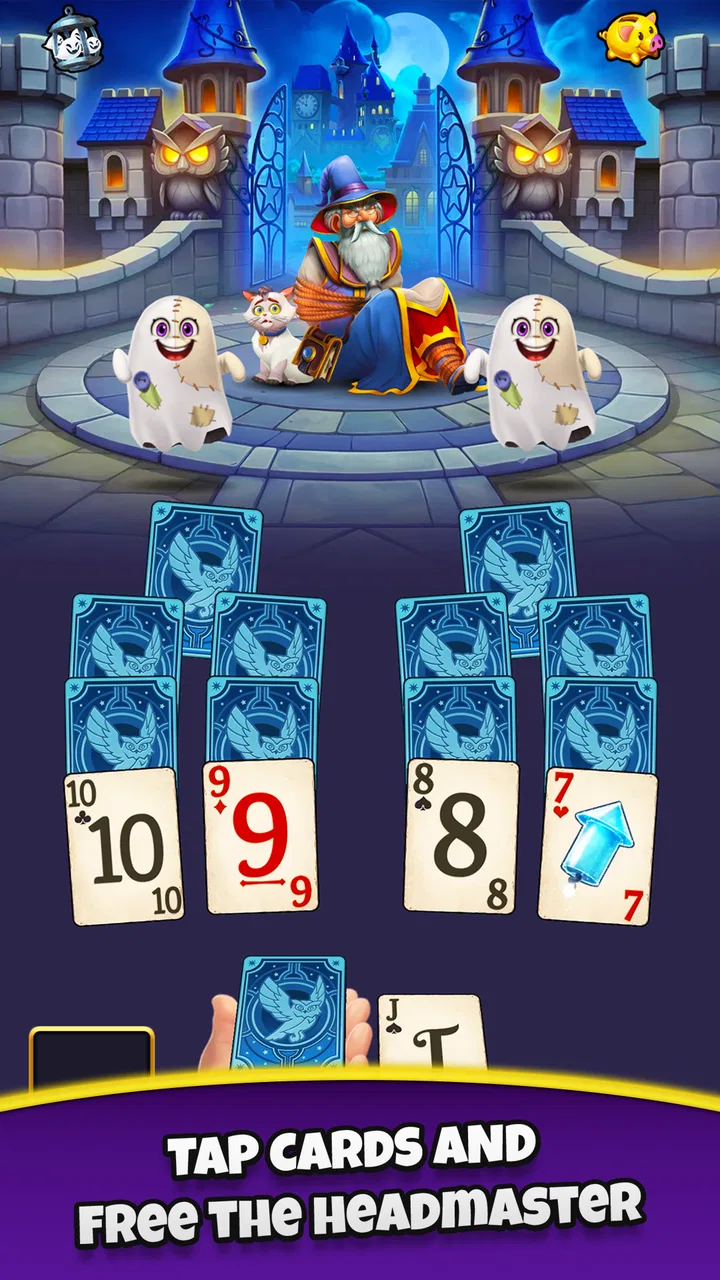
My first impression of Sorcery School was that it wants to make solitaire feel like a small fantasy journey rather than a plain card exercise. That is a good starting idea for anyone who enjoys familiar card games but needs a little more atmosphere to stay interested. You still spend most of your time arranging cards and looking for playable moves, yet the presentation gives each session a sense of progress through a magical school.
Pretty Simple, the developer behind the game, has kept the basic invitation easy to understand: play solitaire, use the setting to add a touch of spellcraft, and move through an adventure at your own pace. It is a free card game for Android, rated for Everyone 10+, with a current version of 1.13930.2 and support from Android 7.0 onward. That broad compatibility makes it approachable for people using older phones as well as newer devices.
The game has attracted a 4.6 average from around 20 thousand ratings, while total installs have passed 500 thousand. Those figures suggest that the concept has found an audience, but they do not replace personal fit. If you want a completely traditional solitaire table with no fantasy framing, this may feel busier than necessary. If you like card puzzles with a light sense of discovery, the school setting gives the familiar format more personality.
You May Also Like

 Blood Strike: 2.5 Anniversary
Blood Strike’s Loadouts Turn Every Drop Into a Tactical Gamble
A close look at Blood Strike’s custom loadouts: how fast access to signature weapons reshapes its battle royale rhythm, rewards preparation, and narrows the gap between fights.

 Pandora - Music & Podcasts
Pandora’s Music Is Easy to Start, but Harder to Recover
Pandora’s strength is its low-effort path from a seed to a station. Its weak spot is how much confidence it asks you to place in connection, setup, and quiet recovery.

 8 Ball Pool
 Is Built on Rivalries, Rematches, and Routine
A close look at the rivalries, rematches, shared routines, and unanswered safety questions that turn a quick pool match into a persistent mobile community.

 Samsung Music
’s Quiet Strength Is Playing What You Already Own
Its reach comes less from spectacle than from dependable access to a personal library. That simplicity is both the app’s strongest retention engine and its ceiling.

 AccuWeather: Weather Radar
AccuWeather Review: A Quick, Clear Forecast for Everyday Decisions
For everyday plans, the best forecast is the one you can understand quickly. AccuWeather makes rain timing, radar, and local conditions easy to act on, with a few trade-offs.

 Hill Climb Racing
Why Hill Climb Racing Still Turns Crashes Into One More Run
A tiny car, a bumpy hill and one more upgrade: Hill Climb Racing keeps resurfacing because its simple chaos makes every near-miss feel personal.
More From Our News Desk



What to expect when you begin
The safest way to approach Sorcery School is to think of it as a casual solitaire game with an adventure layer, not as a full role-playing game built around complex strategy. The cards remain the main event. The magical theme helps connect one session to the next, but your enjoyment will still depend on whether you like planning short sequences, uncovering hidden cards, and deciding when to use a move immediately or hold it for later.
That distinction matters because the store summary may sound more action-oriented than the actual moment-to-moment experience. “Casting spells” here should set your expectations for themed progression and useful game assistance rather than make you expect a combat system. The pleasure comes from solving card layouts and seeing the broader school journey develop around them.
I found the format best suited to short breaks. A quick session can fit into a commute, a waiting room, or the few minutes before bed without requiring the concentration of a long strategy game. It also works when I want something more engaging than endlessly scrolling but less demanding than a competitive card title. The rules are familiar enough to understand quickly, while the adventure framing gives me a reason to return.
At the same time, the game is not ideal for every solitaire player. Someone who prefers a quiet, minimalist interface may find the fantasy presentation distracting. A player looking for deep deck construction, direct competition, or a highly demanding puzzle will probably find better choices elsewhere. Sorcery School is strongest in the middle ground: more character than a bare solitaire app, but easier to enter than a serious strategy card game.
One useful mindset is to treat each board as a small decision problem rather than a race. The obvious move is not always the best move. Before tapping a card, I look at whether it exposes another card, opens a useful sequence, or preserves flexibility for the next turn. That habit is more valuable than trying to play quickly, especially on layouts where an early careless choice can leave the remaining cards awkwardly arranged.
Getting comfortable with the first setup
Installation should be straightforward for compatible Android devices. The minimum operating-system requirement is Android 7.0, so the game is not restricted to recent hardware. After opening it, I recommend taking a moment to understand the screen before chasing progress. Identify the active card area, the available moves, and any buttons connected with assistance or the wider school journey. Learning where these controls sit prevents accidental taps when a board becomes complicated.
Because the game is free to download, there is no purchase decision blocking the first test. However, it includes optional in-app purchases ranging from $1.99 to $399.99 per item. That is worth keeping in mind from the beginning. I would play several sessions without buying anything, learn whether the basic rhythm suits me, and only then decide whether any optional purchase genuinely improves my experience. A free entry point is useful, but it should not be confused with an entirely purchase-free design.
My practical setup advice is simple: start when you have enough attention to learn the card flow, not while rushing between tasks. The opening moments teach more than the rules. They also show whether the visual style and pacing feel comfortable on your particular screen. If the cards look crowded or the decorative elements compete with the board, adjusting your device’s display settings may help, although the exact options available will depend on your phone.
Do not worry about memorizing every magical term immediately. The important first skill is recognizing what a legal card move looks like and understanding how one decision changes the next available choice. Once that becomes automatic, the surrounding progression is much easier to appreciate. The school theme works best when it supports the card puzzle instead of becoming another system you feel obliged to study.
How to reach the first meaningful success
For a first successful board, I suggest slowing down before making the opening move. Scan the visible cards and ask which action reveals the most information. A move that uncovers a face-down card is often more valuable than one that merely extends a sequence, because it gives you another piece of the puzzle. This is a small but important difference between tapping whatever is available and playing with a plan.
When several moves seem possible, prefer the one that keeps more routes open. For example, if one card can be placed in more than one useful direction, avoid spending that flexibility too early unless it exposes something important. Solitaire layouts can punish a player who uses a convenient card simply because it is available. I have found that preserving options makes the board feel less random and gives me more chances to recover from a less-than-perfect start.
Another good beginner habit is to separate progress from perfection. You do not need to understand the entire adventure before enjoying a successful layout. Focus first on completing the immediate card objective. Once you have a feel for the board, pay attention to how the surrounding magical progression gives context to that win. This order keeps the game reassuring instead of making the theme feel like homework.
If you get stuck, resist the urge to restart instantly. Spend a few seconds reviewing the cards you ignored earlier. Often the problem is not that the board is impossible, but that a useful sequence was opened in the wrong order. This review process is one of the better reasons to play a themed solitaire game: the low-pressure format lets you learn from a mistake without the embarrassment or time pressure of a multiplayer match.
A realistic everyday example is a short evening break after work. I might open the game intending to play one board while waiting for dinner. Rather than rushing through it, I use the first few moves to uncover information, keep flexible cards available, and finish with a clear sense of progress. If the board takes longer than expected, I can stop without losing the value of the session. That makes it more practical than many games that demand a long uninterrupted run.
Where new players are most likely to get confused
The biggest possible source of confusion is the relationship between the solitaire board and the school adventure. They are connected, but they serve different purposes. The board asks you to solve the immediate card layout; the adventure layer gives those wins a broader theme. If you expect every magical element to change the rules dramatically, the experience may seem modest. If you see it as a wrapper that adds direction and atmosphere, the structure makes more sense.
It is also easy to mistake a helpful option for a move that should always be used. Assistance can be valuable when you are learning, but relying on it at every difficult moment may reduce the satisfaction of finding the solution yourself. I prefer to make my own scan first, then use help only after I have identified the part of the layout causing trouble. That approach turns assistance into a learning tool rather than an automatic button.
New players may also assume that the fastest visible move is the safest one. In practice, card order matters more than speed. Before committing, check what the move will leave behind and whether it blocks access to a card you may need later. This is especially important when a board presents several attractive actions at once. The game is casual, but the better decisions still come from thinking one or two steps ahead.
The free-to-play structure can create a second kind of uncertainty. If you encounter a tempting purchase, ask what problem it solves for you. Is it helping you enjoy the game, or is it simply encouraging you to continue after a frustrating board? Since individual items can cost from $1.99 up to $399.99, I would treat purchases as optional conveniences rather than part of the basic definition of success. A player who wants a fully predictable, one-time-cost experience may prefer a paid solitaire alternative instead.
That trade-off does not automatically make Sorcery School a poor choice. Free access lets you test the central card play before spending anything, which is valuable. My advice is to establish a personal limit before playing regularly and to avoid buying during a moment of annoyance. If the game is enjoyable without extras, that is a good sign. If progress feels worthwhile only after paying, it may be the wrong solitaire app for you.
What to do after the first win
Once the basic card flow feels familiar, the next step is to play with more deliberate priorities. Instead of measuring a session only by whether you finish, notice which choices create better board control. Try exposing hidden cards earlier, preserve cards that can serve several purposes, and avoid emptying a useful sequence merely because it looks satisfying. These small adjustments make repeat play more interesting without requiring advanced knowledge.
I also recommend alternating between focused sessions and relaxed ones. In a focused session, study the layout and treat each move as a puzzle. In a relaxed session, accept that you may make imperfect decisions and simply enjoy the magical setting. This prevents the game from becoming another task to optimize. The strongest part of the design is its ability to support both moods: thoughtful enough for a short mental challenge, gentle enough for casual play.
Compared with a standard solitaire app, Sorcery School offers more reason to care about the next session because the cards sit inside a continuing fantasy context. Compared with a collectible or competitive card game, it asks less of your time and does not make direct rivalry the center of the experience. That makes it a good bridge for someone who has outgrown plain solitaire but does not want a complicated card battler.
On the other hand, traditional solitaire is the better choice if you want the cleanest possible interface and no surrounding progression. A competitive card game is more suitable if your main motivation is testing yourself against other people. Sorcery School occupies its own narrower space, and that is both its appeal and its limitation: the adventure layer adds flavor, but it cannot replace deep variety for players who need a more demanding system.
The age rating of Everyone 10+ makes it a reasonable option for a broad audience, although younger players should still have an adult explain that optional purchases exist. The game’s relaxed card format is easier to share with a family member than an intense action title, but the purchase range means I would not hand over a device with unrestricted buying access. A little supervision is sensible even when the content itself feels light.
With its release on October 6, 2023, and ongoing version number 1.13930.2, the game presents itself as an established mobile title rather than a one-screen solitaire experiment. I would still judge it by how well the current build runs on your own phone, especially if the device is older. The Android 7.0 requirement helps with access, but compatibility alone does not guarantee that every screen size or hardware combination will feel equally comfortable.
My recommendation is to try Sorcery School if you want a free solitaire game with a magical identity, a gentle sense of adventure, and enough decision-making to make short sessions feel meaningful. Start without spending, learn the board before using assistance, and pay attention to whether the surrounding progression adds enjoyment rather than distraction. I would skip it if you want pure classic solitaire, a fixed one-time price, or serious competitive depth.
For the right player, the appeal is quite specific: it turns a familiar card routine into a small daily escape. I like that I can approach it casually, yet still improve by thinking about card order and future options. The best way to enjoy Sorcery School is to treat the magic as motivation and the solitaire decisions as the real skill. That balance makes it easy to recommend to a friend who wants something approachable, provided they are comfortable with a free-to-play structure and do not expect a full-scale role-playing adventure.
FAQs for Sorcery School
01What is Sorcery School and how does it work?
Sorcery School is an interactive app designed for both Android and iOS users, offering a magical journey through a fantasy world. Players enroll in a virtual school of magic, learning spells, engaging in quests, and interacting with other players. The app combines RPG elements with a rich storytelling experience, providing hours of adventure and exploration.
02Is Sorcery School free to download and play?
Sorcery School is free to download with optional in-app purchases. While the core game is accessible without spending money, players can buy additional features, cosmetic items, or energy packs to enhance their experience. It's designed to be enjoyable without purchases, but spending can speed up progress or unlock exclusive content.
03What are the system requirements for Sorcery School?
To run Sorcery School smoothly, Android users need a device running Android 6.0 or later, while iOS users need iOS 11.0 or later. The game requires a stable internet connection and at least 2GB of RAM for optimal performance. Ensure you have enough storage space, as the app's size can vary with updates.
04Can I play Sorcery School offline?
Sorcery School requires an internet connection to play, as it features online interactions and updates. The game’s multiplayer elements and regular content updates necessitate connectivity. While some features may be accessible offline, the full experience, including quests and interactions with other players, requires being online.
05Are there any parental controls in Sorcery School?
Yes, Sorcery School incorporates parental controls to ensure a safe environment for younger players. Parents can restrict in-app purchases and limit playtime through settings. Additionally, the game includes content filters and chat restrictions to provide a secure and appropriate experience for children engaging with the magical world.
Pros
- Engaging storyline with magical elements.
- User-friendly interface and controls.
- Regular updates with new challenges.
- Beautiful graphics and animations.
- Interactive puzzles enhance critical thinking.
Cons
- In-app purchases can be pricey.
- Occasional lag on older devices.
- Limited offline gameplay options.
- Ads can interrupt gameplay experience.
- Some levels can be overly difficult.

Sorcery School
Gallery